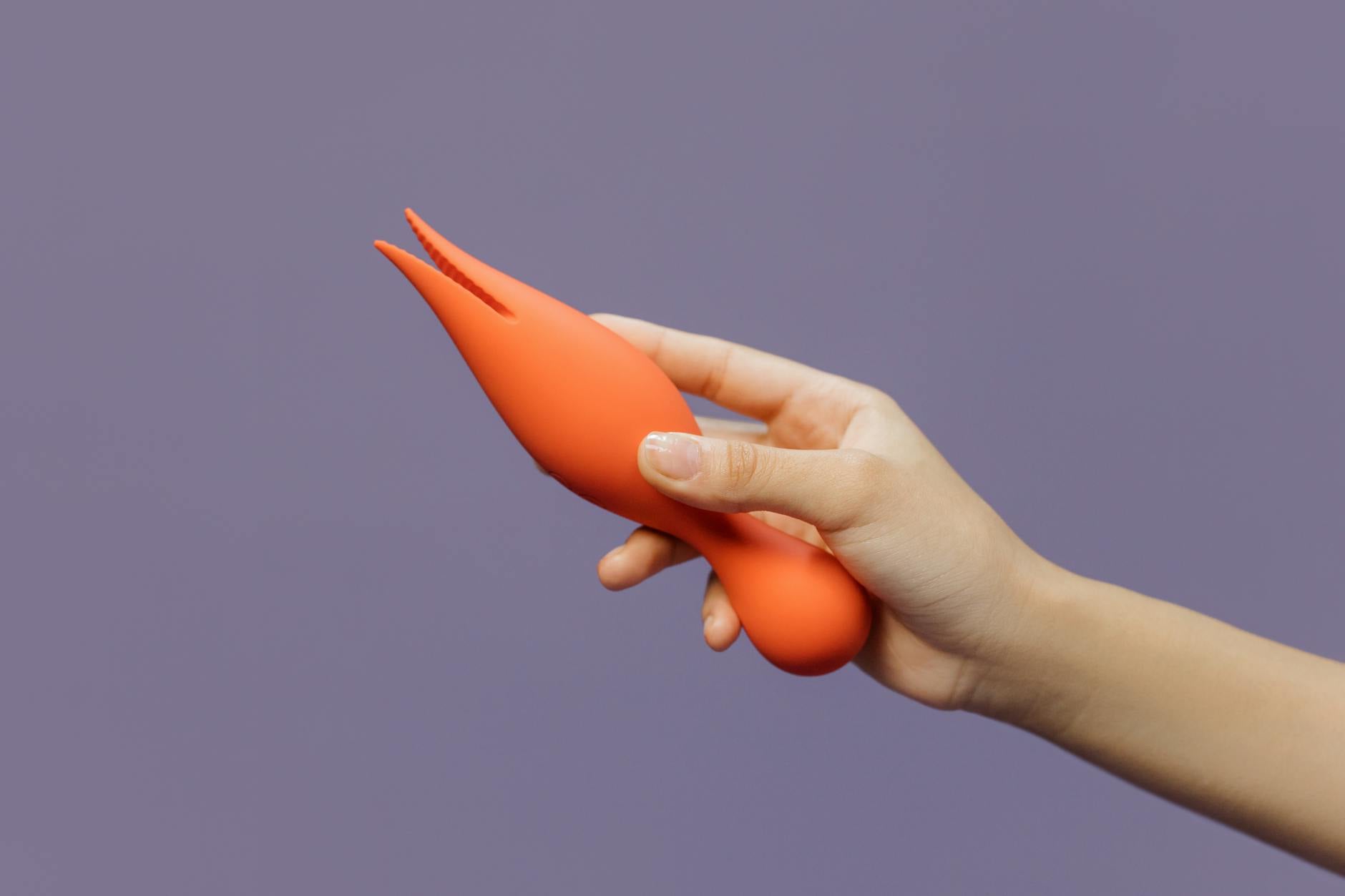
Let's name the thing nobody talks about
Self-consciousness during solo pleasure is the fastest pleasure-killer there is. It beats pain, distraction, and physical discomfort. You can have a lemon vibrator in your hand, know exactly what it does, and still feel so much shame or weirdness that your body stays locked up.
That's not a personal failure. That's your nervous system doing what it learned to do a very long time ago.
Where the self-consciousness actually comes from
Most people think shame about pleasure is about the pleasure itself. It's not. It's about what we absorbed growing up about whose bodies matter, what kind of women are "good," what desire is supposed to look like, and whose right it is to feel good.
If you grew up in a household where pleasure was coded as selfish, or where bodies were private to the point of shame, or where female desire was something to manage rather than honor, you learned early: feeling good about your own body is wrong. That lesson doesn't just vanish because intellectually you know it's nonsense.
Add to that the fact that using a toy is deliberate. It's not accidental pleasure. It's not "something that just happened." It's you, alone, choosing to feel good. That can feel reckless or self-indulgent in a way that surprises you.
And then there's the physical layer: your body actually does stay locked when you're anxious. The muscles tense. Blood flow diverts. Arousal can't build. So the shame creates a feedback loop. You feel self-conscious, your body tightens, nothing works, and that confirms the belief that something is wrong with you.
The work isn't about the vibrator
I say this gently: you can't climax your way out of this using a lemon sucker if your brain is stuck in shame mode. The work has to happen in your head first.
Three things that actually move the needle.
Naming it separately from the act. Shame thrives in silence. When you can say out loud to yourself, "I feel self-conscious about touching myself," you separate the feeling from the action. The feeling is information. The action is neutral. One doesn't have to contaminate the other.
Asking yourself whose voice that is. When you feel the self-consciousness rise, pause. Is that your voice? Or is it your mother's, or a partner's, or a religious message from childhood? Whose rule is this, actually? Because the rule has power only if you keep it secret and treat it like your own belief. Once you identify it as borrowed, it loses most of its grip.
Understanding that pleasure is not selfish. This one rewires something deep. Pleasure is data. It tells you what works, what feels good, what your body wants. That information is useful. It's not self-indulgent to know your own body. It's essential.
Why lemon vibrators specifically help with this
Suction-based stimulation like a lem vibrator feels less like "doing something" and more like something happening to you. That distinction matters when shame is in the picture.
There's less performative element. You're not thrusting or controlling rhythm the same way you would with a traditional vibrator. The sensation builds on its own timeline. That can actually make it easier to relax into, because you're surrendering to the sensation rather than orchestrating it.
Lemon clitoral vibrators also tend to feel more intense and focused because of how suction works. That intensity can actually break through the anxiety. When sensation is strong enough, the thinking mind steps back. You stop narrating the experience and actually have it.
The practical roadmap
If shame is the barrier, here's what actually works.
Step one: Get curious instead of judgmental. You're exploring. You're not trying to have an orgasm. You're not trying to feel a specific way. You're just noticing. What does this feel like? What happens if you move it slightly? That framing takes the performance pressure off completely.
Step two: Pick a time when you're genuinely alone. I don't mean physically alone. I mean a time when you're not worrying about interruption. Lock the door. Put your phone in another room. Set a boundary that nobody will bother you for 30 minutes. Your nervous system needs to know you're actually safe before it will relax.
Step three: Start with clothes on or partially on. If removing everything feels too vulnerable, don't. The goal here is not nudity. The goal is sensation. You can explore through underwear or a skirt. You're teaching your nervous system that touch can feel good before you add the vulnerability of being fully undressed.
Step four: Keep your eyes open, or keep the lights on. This sounds strange but it matters. Closing your eyes and darkness can amplify anxiety and intrusive thoughts. Keeping a light on or keeping your eyes open keeps you grounded in the present. You're watching something happen to your body, not disappearing into your head.
Step five: Go slow. The lemon clitoral vibrator has multiple intensity levels for a reason. Start at level one. The goal is not to feel a lot. The goal is to feel something and notice that nothing bad happened. Repeat that cycle. Feel a little. Notice you're safe. Build from there.
The role of your partner, if you have one
Self-consciousness doesn't live in a vacuum. If you have a long-term partner, their presence or absence affects how comfortable you feel exploring pleasure on your own.
If they know and they're supportive, sometimes it helps to have them in the room (not watching, just present). Knowing they won't judge you can paradoxically make it easier to relax. But only if the relationship foundation is actually solid. If there's criticism, control, or judgment in the relationship, being watched will deepen the shame.
If they don't know you're exploring and you're keeping it secret out of shame rather than privacy preference, that's worth examining. There's a difference between healthy privacy and hiding born from fear. One feels clean. One feels heavy. Notice which one this is.
When self-consciousness is a deeper issue
Sometimes the self-consciousness isn't just about pleasure. It's about your body itself. You don't like how you look. You feel disconnected from your body. You've experienced trauma. You have a history of control or criticism from someone important.
That's when working with a therapist specifically trained in sex therapy or trauma can be genuinely transformative. A lemon vibrator is a tool, not a cure-all. If something deeper is running the show, the tool won't help until that layer is addressed.
What changes when you move through this
Here's what I see happen when people actually do this work. At first, they feel something small. A little sensation they can notice. Then that sensation isn't accompanied by shame or judgment. Then it becomes slightly more intense. Then they realize their body is capable of feeling good on purpose. Then they start exploring what else is possible.
Self-consciousness doesn't disappear overnight. But it stops being the thing in charge. You become the thing in charge. You decide what feels good. You decide what's worth exploring. You decide when to use a lemon vibrator and when not to. That shift from passenger to pilot is everything.
Your pleasure matters. Not as rebellion against anyone else's values, not as a statement, not as a performance. It matters because you're a person with a body and that body deserves to feel good. That's the simplest truth and also the hardest one to believe when you've been taught otherwise. Start there.
People also ask
Why do I feel guilty when using a lemon vibrator, even though I'm alone?
Guilt about solo pleasure typically traces back to messages you internalized early about female desire being wrong, selfish, or shameful. Your nervous system learned that feeling good = trouble. That belief gets baked in so deeply that intellectual permission ("it's fine to do this") doesn't override the felt sense that you shouldn't. Identifying where that message came from (a parent, a religious upbringing, a partner's judgment) and consciously deciding it's no longer your rule is how you unwind it. It takes time, but it does shift.
Does using a clitoral vibrator mean I can't enjoy partnered sex?
No. Using a lem vibrator alone teaches you about your own body. That knowledge makes partnered sex better because you know what works, you can communicate it, and you're not dependent on your partner to figure you out. The self-consciousness that makes solo pleasure difficult often also makes partnered sex less satisfying because you're too in your head. Working through shame in private actually improves intimacy with a partner.
How do I stop feeling awkward about owning a lemon sucker?
The awkwardness typically comes from seeing the toy as evidence of something wrong or weird about you. Reframe it the way you'd reframe any health tool. You use a toothbrush because your teeth need care. You use a yoga mat because your body needs movement. You use a lemon vibrator because your body deserves to feel good. It's not a symbol of anything. It's an object that serves a function. The meaning you assign to it comes from shame, not from anything inherent to the toy.
Can lemon vibrators work if I'm dissociated or numb during sex?
Sometimes, yes. The intense, focused sensation of a clitoral vibrator can actually snap you back into your body when you're floating or numb. But dissociation during sex often signals something deeper that needs attention. That might be trauma, anxiety, depression, or a sign that the context doesn't feel safe. Using a lem vibrator might help in the moment, but if dissociation is frequent, working with a therapist to understand why is important. You deserve to be present for your own pleasure, not checked out.
What if I still feel self-conscious after trying this?
Then you're probably bumping up against something that needs more support. Persistent shame about pleasure, difficulty being alone with your body, or invasive critical thoughts during intimate moments can all benefit from working with a therapist trained in sex therapy or trauma. There's no shame in that. In fact, getting help is you deciding your pleasure is worth investing in.
Is it normal to feel more self-conscious the first time I use a lemon clitoral vibrator?
Completely normal. You're doing something new, something deliberate, something you may have been taught not to do. The nervous system flags all of that as unusual. Newness plus shame-adjacent messaging equals high anxiety. That doesn't mean there's anything wrong with you or with the vibrator. It means your system needs time to adjust. Patience with yourself here is not weakness. It's the only thing that actually works.
The bottom line
Self-consciousness kills pleasure faster than anything else, and it's absolutely workable. The shame you feel isn't permanent. It's not character. It's learned, and what's learned can be unlearned. Start small. Start private. Start curious. Notice that touching yourself doesn't actually cause catastrophe. Notice that feeling good is not selfish. Notice that a lemon vibrator is just a tool. Then notice what becomes possible when you stop running the shame narrative.
If you're working through this and want guidance, reach out. Pleasure is worth the effort.