
Let's start with the thing nobody says out loud
One of you wants more. The other wants different. And right now, that gap feels like a problem you're supposed to solve together, which somehow makes it worse. Here's what I see in my practice over and over: couples think mismatched pleasure needs mean there's something broken in the relationship. They're usually just seeing a normal gap that needs a different conversation.
Lemon vibrators, specifically tools like the Lem, aren't the solution to your mismatch. But they're often the bridge that makes the actual solution possible. Let me explain why.
What "different pleasure needs" actually means
This phrase covers a lot of ground. Sometimes it means one partner needs intense clitoral stimulation while the other wants slower, broader sensation. Sometimes it means one person has always had a higher libido. Sometimes it means one of you discovered something new you want to try, and the other isn't sure. Sometimes it just means you want it at different times, different frequencies, different intensities.
The thing these all share: they're not about love or desire or attraction. They're about physiology, history, temperament, and what your nervous system needs to feel good. Understanding that distinction is the first thing that actually helps.
I had a client once tell me her partner wanted what she called "five-minute sex" while she needed twenty. Neither of them was wrong. He had a nervous system that reached arousal quickly and wanted that sensation. She had a nervous system that needed a longer ramp. They weren't incompatible. They just didn't know how to translate.
Why toys feel threatening in this conversation (and why they don't have to)
Here's what I hear: "If I bring in a vibrator, won't that mean I'm not satisfied with my partner? Won't they think I prefer the toy to them?"
Yes, sometimes. If you introduce it the wrong way. If you hand someone a lemon clitoral vibrator and say "I need this because you're not enough," you've just made it about inadequacy. But if you introduce it as "this lets me feel more, which means more sensation for both of us," or "this helps me get there faster, so we have more time together," you've shifted it into collaboration.
The real reason toys threaten people: they make pleasure visible. When it's just bodies, pleasure feels like a private negotiation. When there's a tool involved, it becomes obvious that something was missing, and that can sting. That's not the vibrator's fault. That's a conversation waiting to happen.
The communication part nobody wants to do (but has to)
Before you buy anything, you need to know what you're actually asking for. "I want to use a lemon vibrator" is not the same as "I want to use a lemon vibrator because my clitoris needs more direct suction sensation than finger contact provides, and I'd love for you to be part of that."
The second one gives your partner information. The first one just announces a change.
Here's what you actually need to say:
-
Start with data, not feelings. "My body needs about 15-20 minutes of focused clitoral stimulation to reach orgasm consistently. That's not about you. That's about how my nervous system is wired." This is stated fact, not critique.
-
Then add what you want. "I want to find a way to enjoy sex together that doesn't require me to wait hours or feel disconnected. I'm thinking a lemon vibrator might help." You're naming the problem you want to solve together.
-
Ask your partner's actual concern. "What are you worried about?" Not "Do you have a problem with this?" because that invites defensiveness. The specific worry is where the real conversation lives.
That third part is crucial. Maybe they're worried it means you don't find them attractive. Maybe they're worried they're not doing it right. Maybe they've been told their penis isn't enough and they're carrying that. Whatever it is, naming it makes it solvable. Leaving it unnamed just adds resentment.
How a lem vibrator actually changes the dynamic
Okay, so you've had the conversation. Now what?
A lemon clitoral vibrator like the Lem works differently than other toys because it uses suction rather than vibration alone. This matters for your specific mismatch because it gives you options that aren't available otherwise.
If one of you wants intense sensation and the other prefers gentler contact, a suction-based lemon vibrator lets you get to intensity without the direct friction that might feel overwhelming to someone else. You can use it solo while your partner is present, involved, touching you elsewhere. You can use it together, with them controlling the rhythm or holding it. You can use it as warm-up while they focus on other parts of your body.
The point is: it's a tool that lets both of you get what you need without one person white-knuckling through something they don't want.
What this actually looks like in practice
Let's say one of you has a lower sex drive than the other. Maybe you want sex twice a week. Your partner wants four times a week. You could fight about it. Or you could say: "Two times a week, we have full partnership sex. Two times a week, I use a lemon vibrator, and you can be involved however you want to be. That might be holding me, or it might be reading in the next room."
That's not a consolation prize. That's structure that works for both people.
Or let's say one of you comes very quickly and the other needs way longer. Instead of trying to sync them up (impossible), you could say: "You go first, finish, then I use the Lem while you recover and we reconnect." Or: "I start with the Lem to warm up, then you join in." Or: "We use it together as part of foreplay."
The tool lets you stop trying to force your bodies to do the same thing at the same time.
The thing to avoid (and what works instead)
Don't use a vibrator as a workaround for not talking. I see couples introduce toys hoping it will magically fix a mismatch they've never actually discussed. Then the toy becomes another source of tension because it hasn't solved the underlying problem, which is that they don't know how to have this conversation.
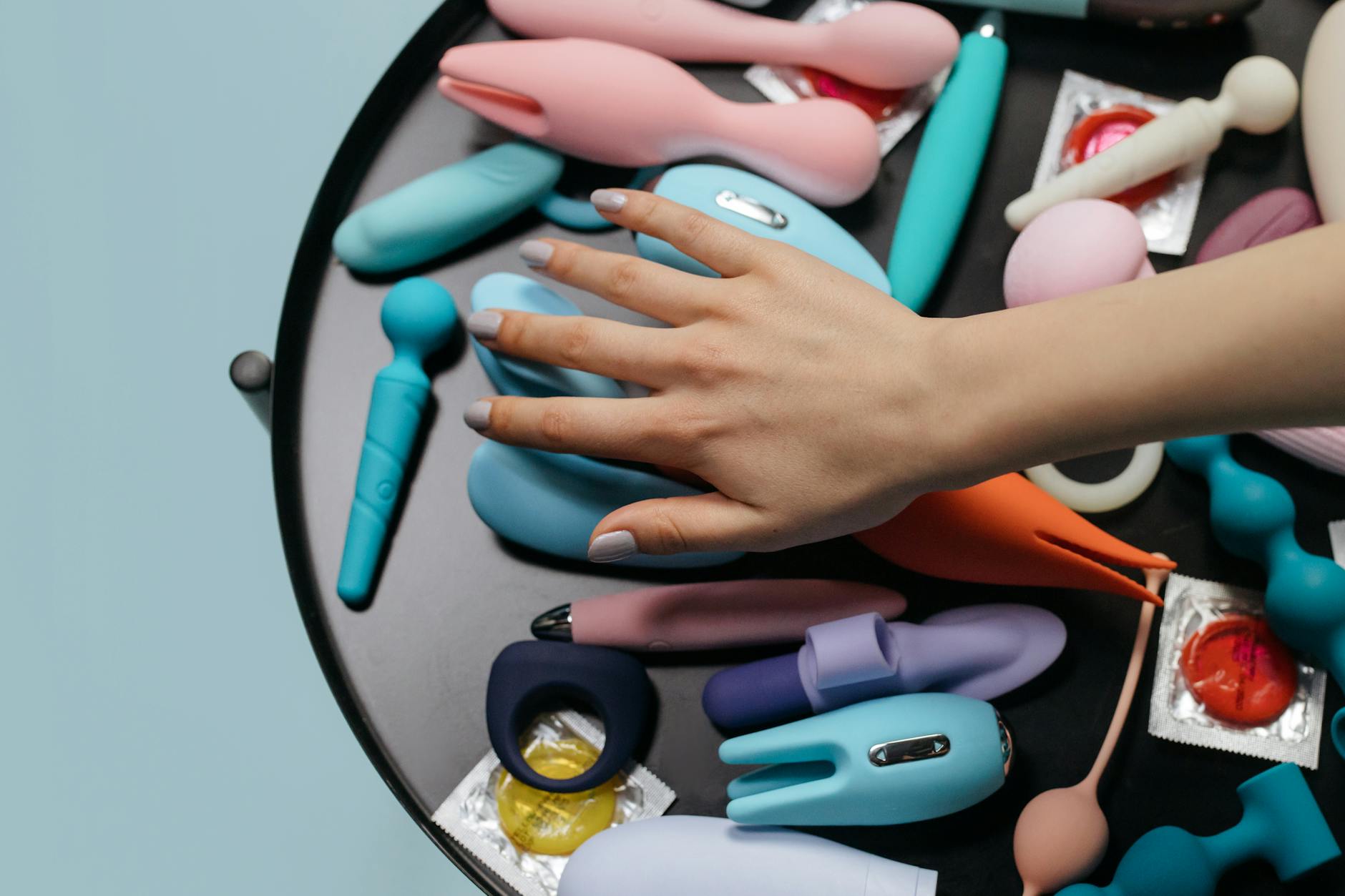
Photo by cottonbro studio on Pexels
What works: conversation first, tool second. The conversation is where the real work lives. The tool just makes it easier to act on what you've already agreed.
Sometimes, honestly, the conversation itself solves the mismatch. One partner says "I feel like you don't really want me" and the other says "I do, but I'm embarrassed about how long I take," and suddenly they're working together instead of against each other. The toy might not even be necessary after that. But now at least you know.
When the mismatch runs deeper
If one of you is asexual and the other is not, or if one person's pleasure needs have changed due to trauma or medication, or if there's been infidelity or resentment sitting underneath this, a vibrator isn't fixing that. That's therapy work. But a tool can be part of what you rebuild together once you're doing that work.
I had another client whose partner had low libido from an antidepressant. She wanted sex more often. They could have fought about it. Instead, she said: "I know the medication is affecting you. That's not your fault. But I still have needs. Can we find a way that works for both of us?" They ended up using a lemon vibrator as a middle path where she could access pleasure without pressuring him into something he didn't want. It wasn't the vibrator that solved it. It was the willingness to find a structure that honored both people.
The longer view
Mismatched pleasure needs aren't a sign that a relationship is in trouble. They're normal. Bodies are different. Nervous systems are wired differently. Life phases change what people want and need.
What matters is whether you're willing to see the mismatch as information rather than failure. A lemon vibrator can be part of that process, but only if it's part of a real conversation about what each of you actually needs and wants. The tool makes it easier. The conversation makes it possible.
FAQ
How do I bring up using a lemon vibrator without making my partner feel inadequate?
Lead with what you want, not what's missing. "I want to explore this because my body responds well to suction stimulation, and I'd love for you to be involved" is different from "I need this because you're not doing it right." You're describing your body's needs, not criticizing theirs. Also, pick a time that's not during sex. Neutral, calm conversation works so much better than mid-intimacy.
What if my partner refuses to engage with toys at all?
That's information. Ask why. Is it a previous experience? A belief? Fear? Shame? Once you know the actual reason, you can work with it. Some people need time. Some need to start by just being in the room while you use the toy. Some need education. Some genuinely prefer not to involve toys, and that's their right. But at least you'll know you're working with a real boundary rather than just a reflex.
Can using a lemon vibrator actually help us be more sexually compatible?
Yes, if the mismatch is about intensity or stimulation type. A lem vibrator gives you another option in your toolkit, which means more flexibility. But if the mismatch is about desire level or frequency, it helps more by taking pressure off than by magically increasing attraction. It's a tool for what's already there, not a replacement for desire.
Should we use the vibrator together or separately?
Both. Start separately if you're nervous. Let each person get comfortable with it on their own terms. Then experiment with using it together. Some couples find that shared vibrator use is super intimate. Some don't. There's no one right way. You're figuring out what works for your bodies and your dynamic.
What if we try this and it doesn't help?
Then you know something real about what you both need. Maybe the issue isn't stimulation intensity. Maybe it's frequency, or emotional connection, or timing. A vibrator clarifies what the actual problem is, which means you can address the real thing instead of guessing. That's valuable data.
How do I know if my partner's pleasure needs are actually different, or if we just have communication problems?
Both can be true. Start by assuming both. Have the conversation about what each of you actually wants and needs. Then see if a tool helps you access that. If the communication is the problem, the tool won't fix it. But if you genuinely have different bodies and different needs, the tool gives you options. You'll figure out which one it is by trying.
Here's what actually matters
Your pleasure needs don't have to match to be together. What has to match is your willingness to work on it. A lemon vibrator is just hardware. What matters is that you're both willing to say "Your pleasure matters to me, even if it looks different from mine," and then act like you mean it.
That's the bridge. Everything else, including the toys, is just furniture on it.
If you're ready to start that conversation, or if you want to talk through what's getting in the way, reach out to us at Hallo Nancy's Lems. We're here to help you find what works.